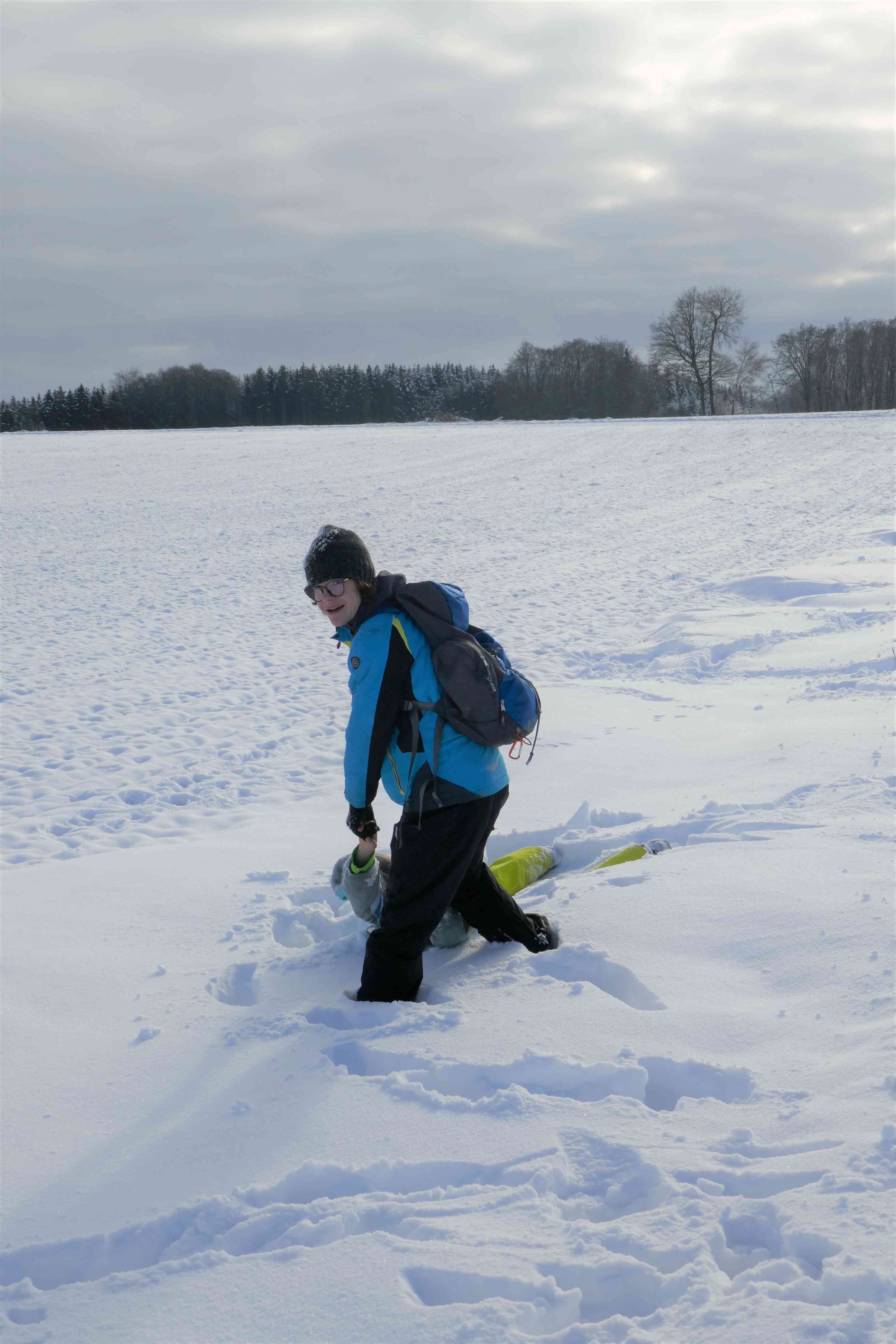
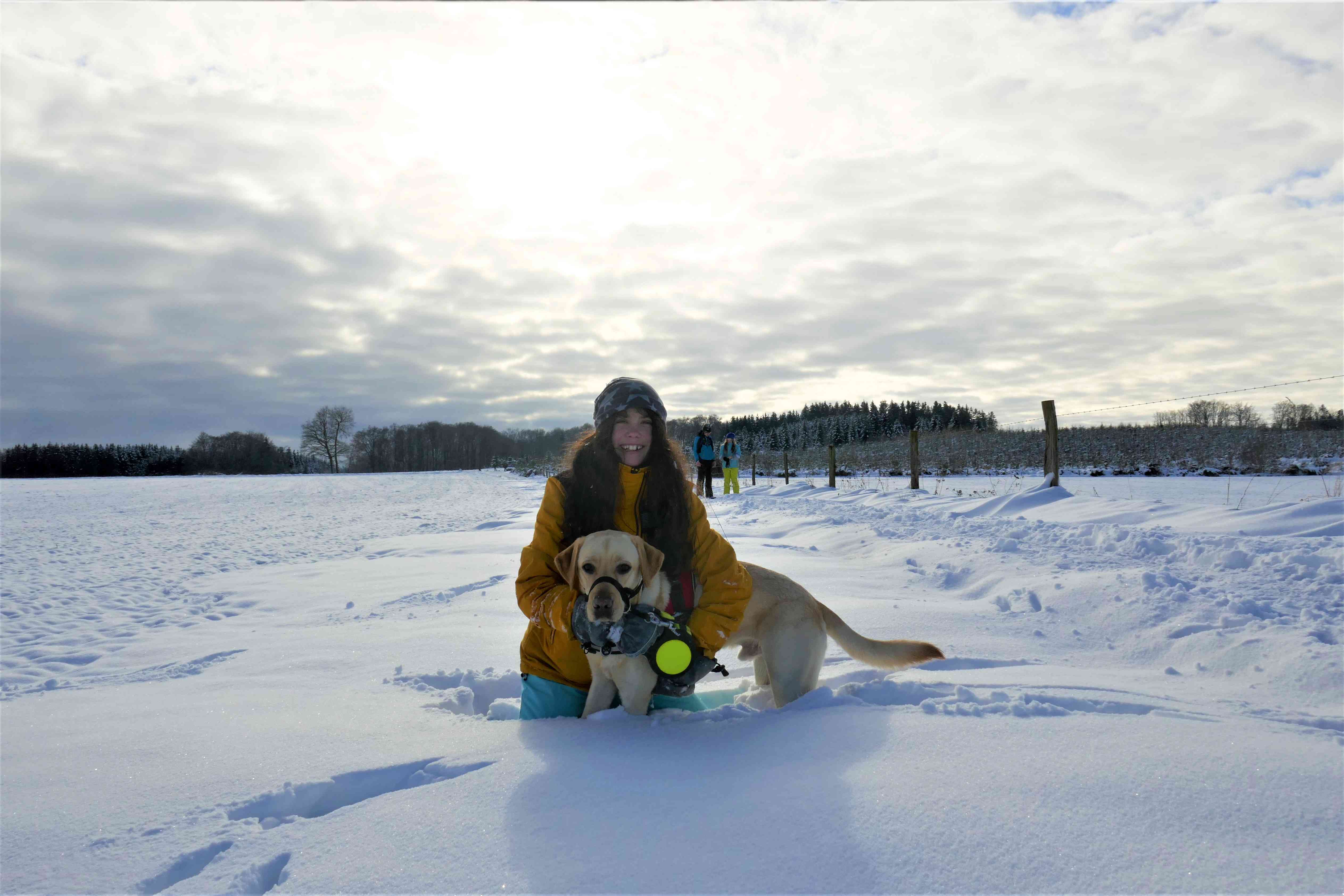
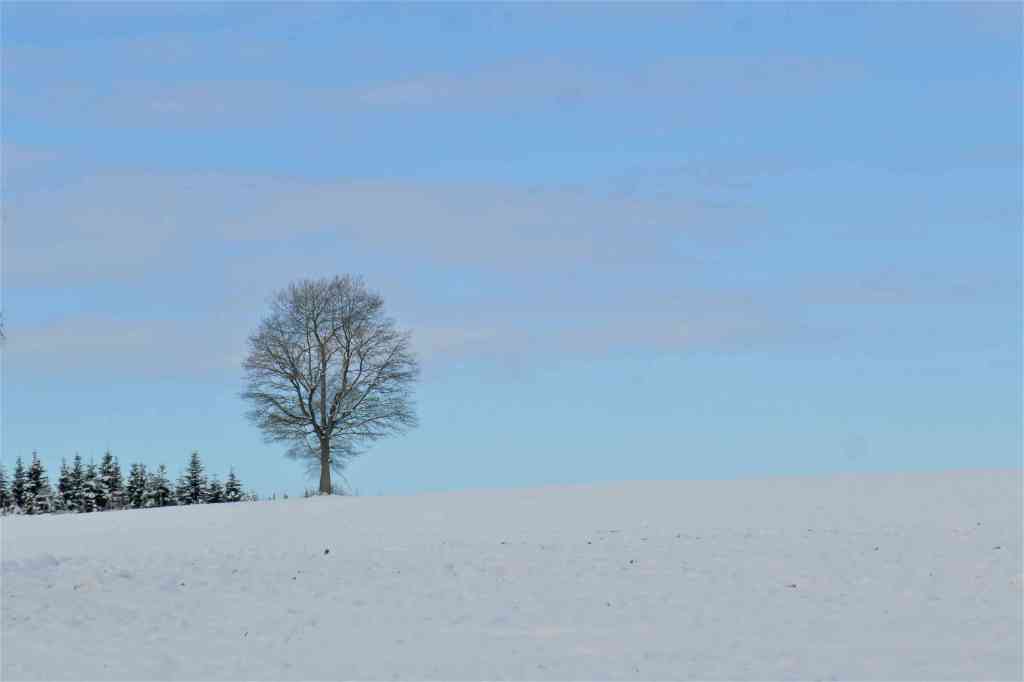
For two kilometres of its 10km length, the “Auto Pedestre Hoffelt” hiking path runs alongside the Belgium-Luxembourg border. Although there is no natural physical feature marking the frontier, the snow had curiously chosen this precise geopolitical line to drift, a welcoming white powderpuff of endless fun for kids and dog alike.
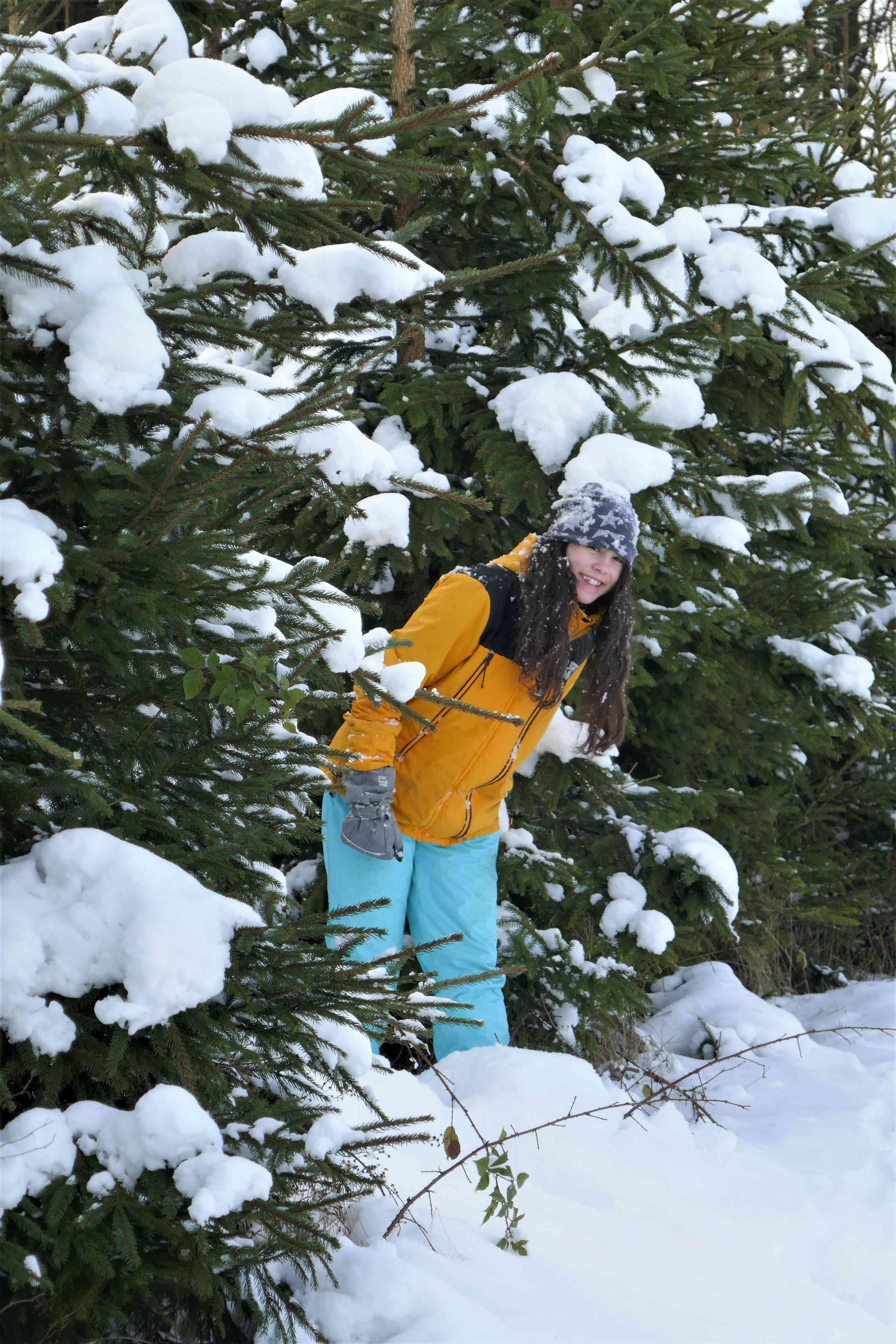
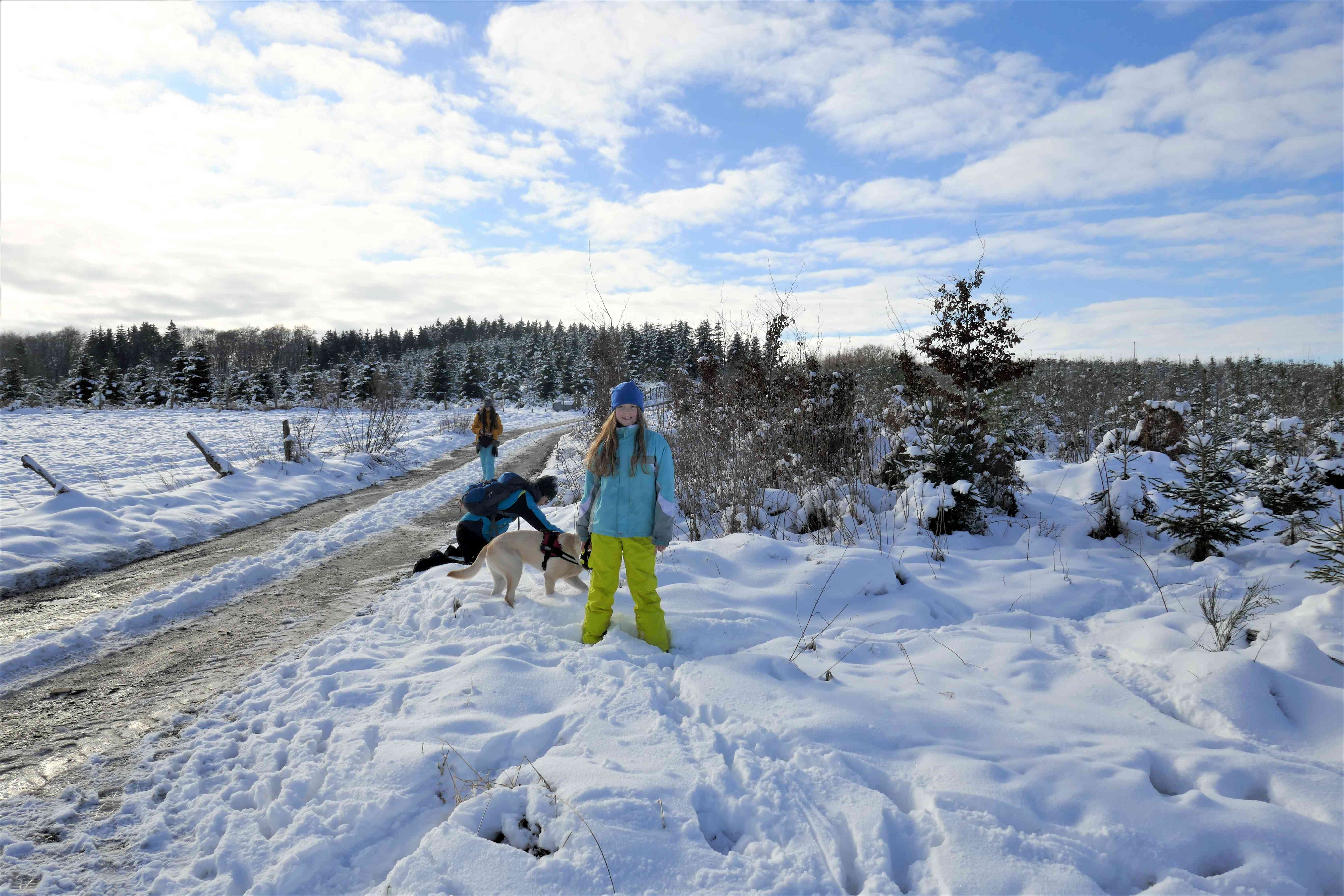
A middle-aged couple in full hiking gear marched purposefully past us, too old to play in the snow. Eventually the kids decided to move on too and we continued towards our lunchtime destination: Helzer Klaus – a chapel in the woods. However, a glance at the map showed that the AP Hoffelt made a lengthy and rather pointless “V”, so we took a shortcut through radiantly bright fields and twilight dark forest… before discovering that the chapel was a little beauty!
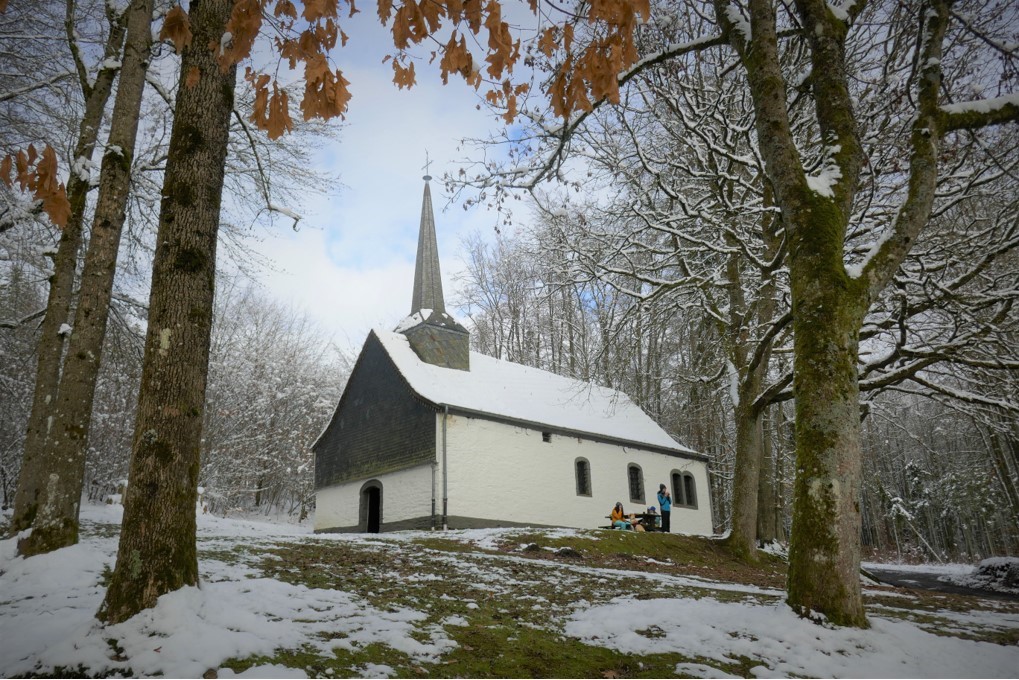
Whilst unpacking the baguettes and near-frozen cheese on a snow-topped picnic table, I saw the middle-aged couple approaching the chapel from the other direction: we’d overtaken them when we took the shortcut. They glanced at us, smiled, exchanged a cursory “Moien”… and kept on walking without breaking their stride.
I can only assume that they were locals who’d been here hundreds of times before. If not, boy, did they really miss out on something…
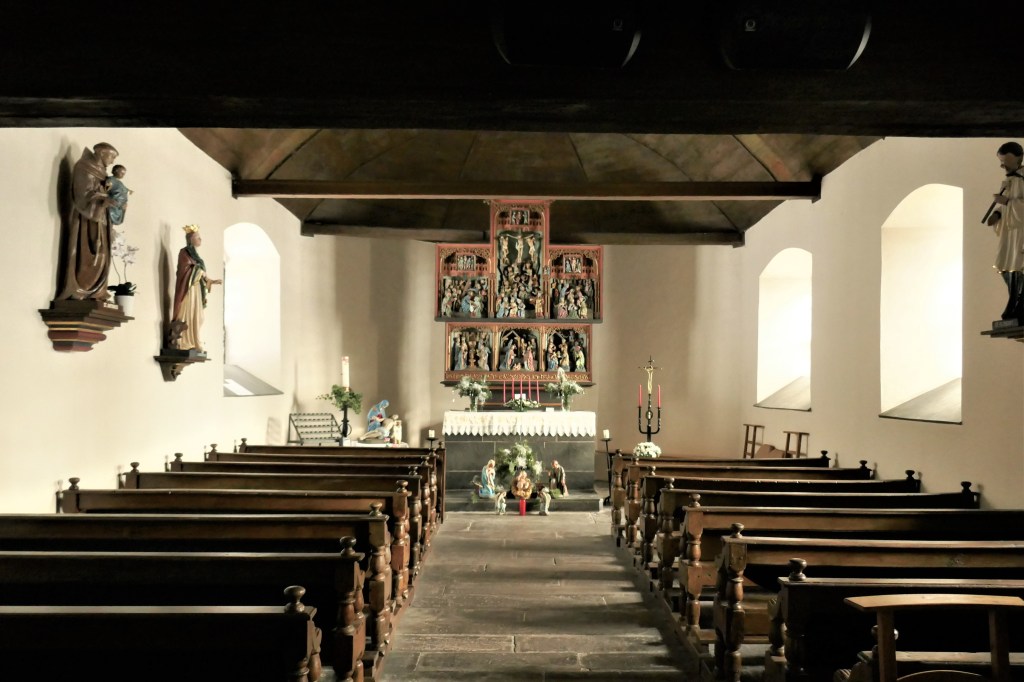
Helzer Klaus has been a place of worship and reverence for hundreds – if not thousands – of years. The presence of a natural spring, a burial mound and a Roman road nearby all provide historical evidence of this, just in case you somehow don’t feel the spiritual vibes that seep from the whitewashed walls and whispering trees. It probably turned Christian under Charlemagne in the 9th century, but it wasn’t until 1474, under orders from none other than the Pope himself, that a larger chapel was built. Soon afterwards it was adorned with a magnificent carved altar; the original is now in the larger church in the nearby village (a point somehow overlooked by the otherwise excellent English audio presentation inside the chapel…), but there is still a replica to admire in Helzer Klaus itself:
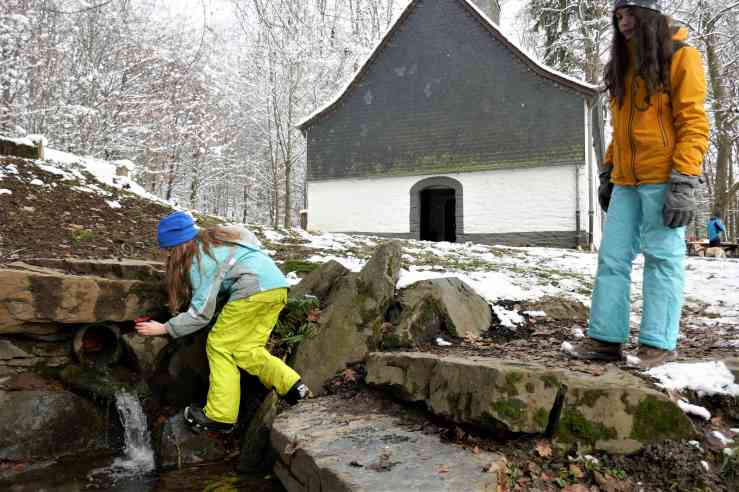
Just a few steps away from its front door gurgles the spring which probably first attracted people to this spot, back in the dark mists of time. Despite everything being deep-frozen all around us, water gushed eagerly out of the ground; it’s easy to see why this could be interpreted as a sign of divine presence. There’s a curious folk tale surrounding the chapel and the spring:
According to the legend told in the surrounding villages, many who had grown old and longed for the sanctuary of marriage made secret pilgrimage to the hermitage and came back full of hope. They would walk three times around the chapel, hit their head twice against the thick fir tree, jump barefoot into the spring and could then hear the forename of their husband or wife-to-be in the rushing of the water.
From the audio presentation at Helzer Klaus (English version)
Unfortunately, we couldn’t test this out; alas I already have a wife, and the kids aren’t exactly bothered about marriage just yet. Besides, jumping barefoot into an icy spring may not be the wisest thing to do on a 10km hike at -3°C. Another folk myth claims that women crept clandestine to the spring at dead of night to drink the water, believing that it increased fertility. Again, not something that concerned any of us, but the lure of the crystal-clear ice-cold water was too great to resist anyway.
On we continued through the frozen north back to our starting point. It’s about an hour to Hoffelt / Helzen from our home – about as far away as it is possible to get in Luxembourg – but the snowy landscape and the little ancient chapel in the woods made it a more-than-worthwhile trip.
(c) 2021 Jonathan Orr

 Luxembourg Outdoors
[…] Auto-Pedestre Hoffelt – 9km – Easy / Medium – LU/BE […]
LikeLike