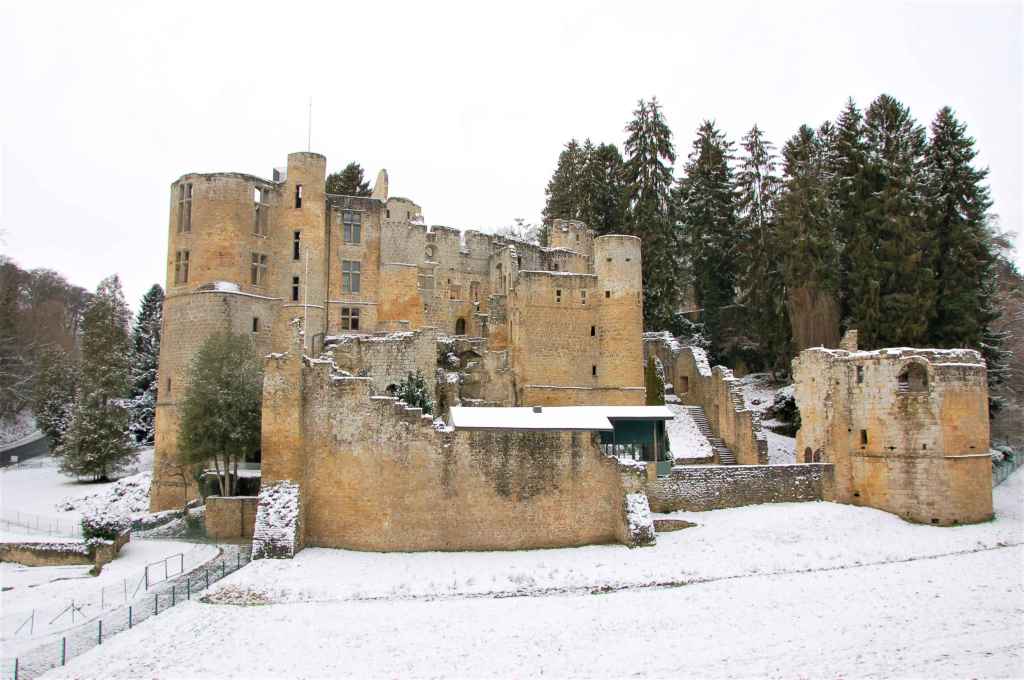
The sturdy sandstone walls of Beaufort Castle looked predictably majestic after the recent snowfall. Under its medieval towers, a modest scattering of visitors were delightedly taking photos, whilst others were setting off on one of the many well-trodden hiking routes leading up and down the Haupeschbach valley.
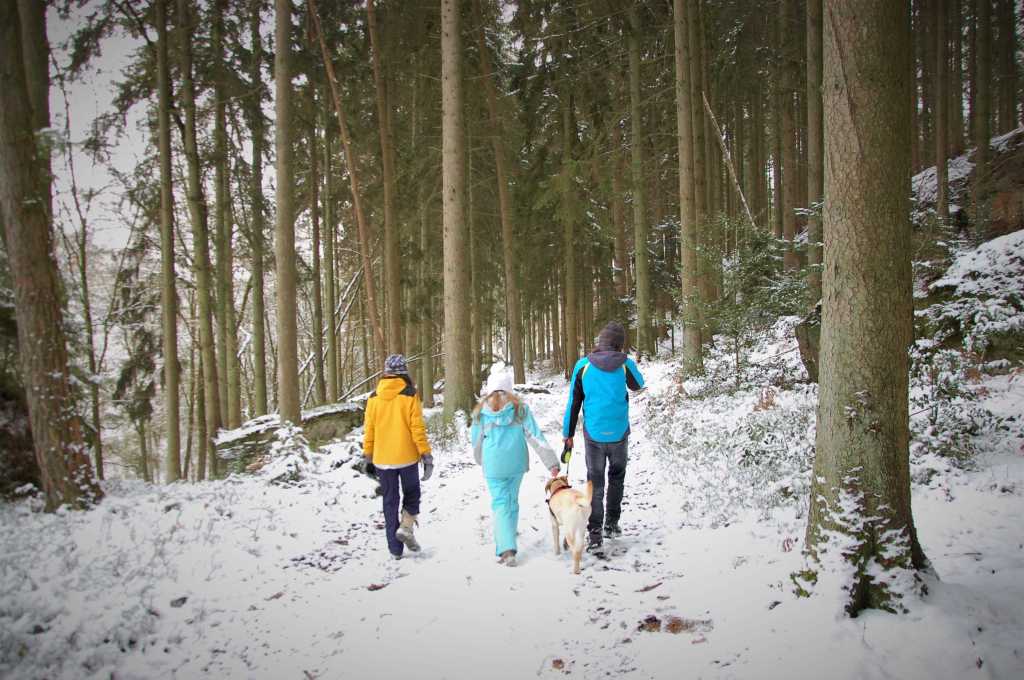
We were also off for a hike, but on a different route and with a different agenda. Just past the castle and a sorry, abandoned old chapel, an easily-missed entrance leads up to a cliff-top path and broad plateau not featured in any of the hiking guides. It’s our secret path, a place that the kids call the “Unexplored Territories” (because we keep on finding new ways through it and have literally never met another human being there).
The perfect place and time to go looking for animal tracks in the snow.
It didn’t take us long to find our first tracks: the unmistakable but unspectacular prints of a mouse, scurrying to and from its hole. Near it, the heart-shaped tracks of roe deer, located dangerously – but surefootedly – close to the cliff’s edge.
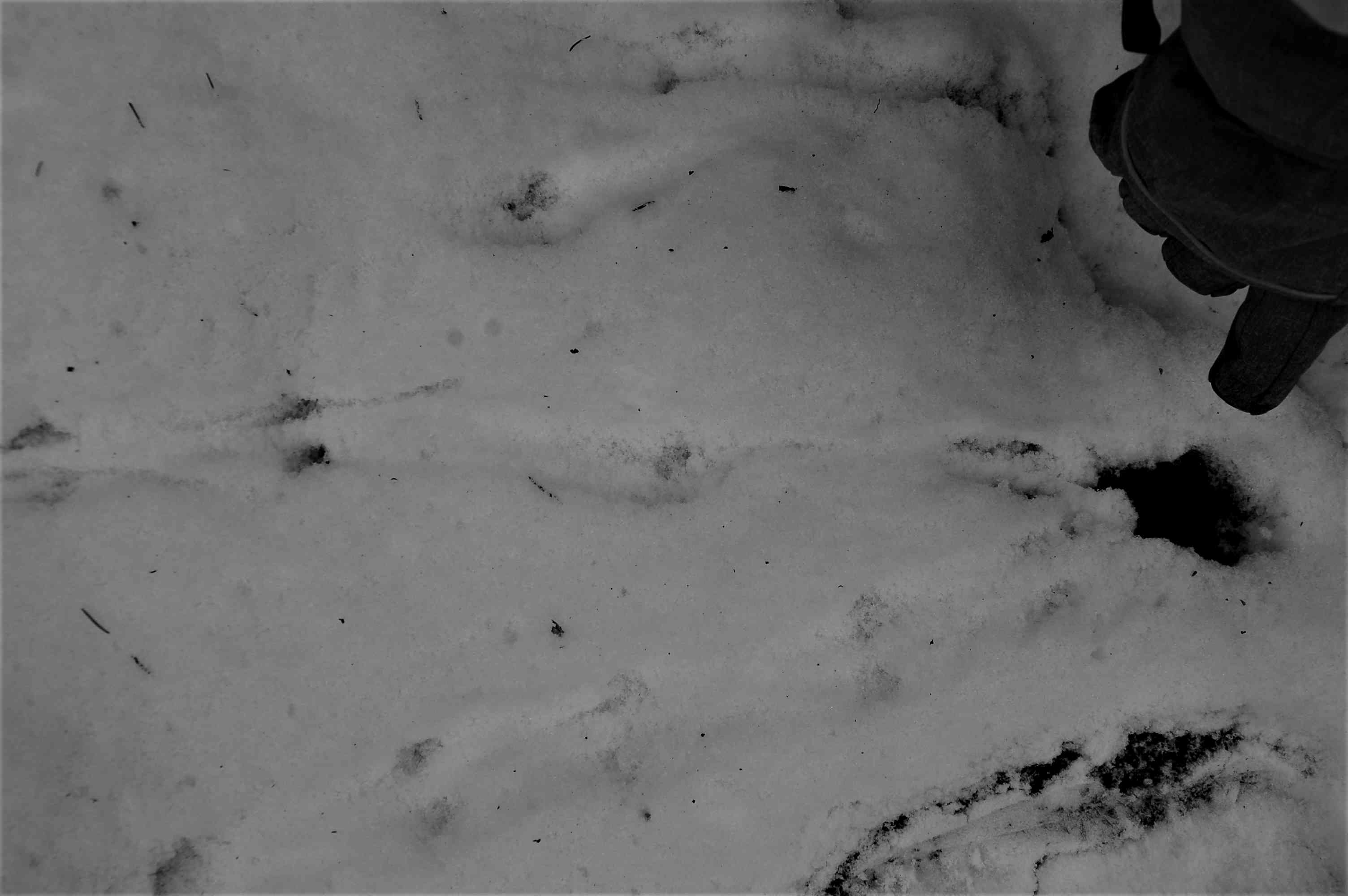
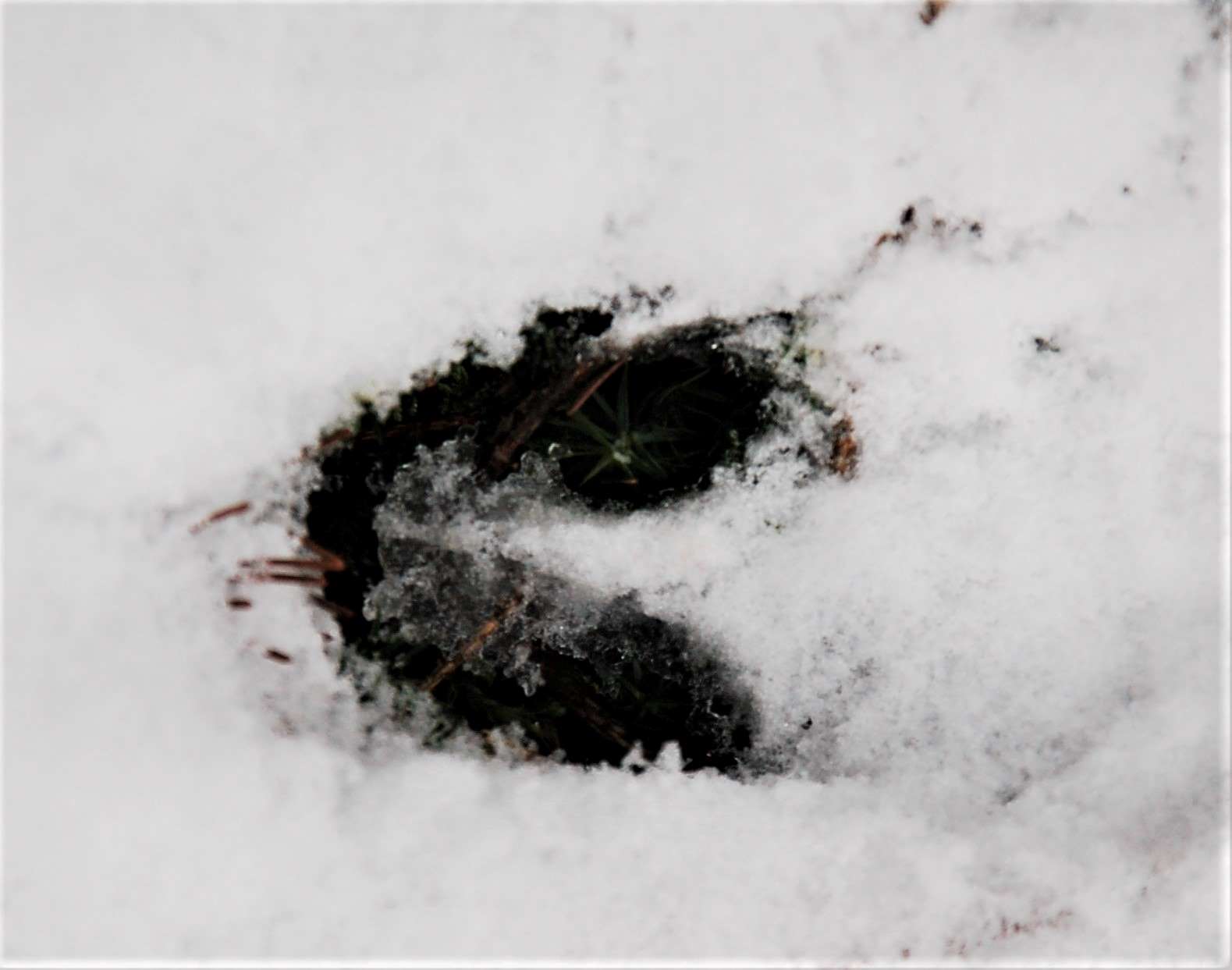
These animals were expected, but the next set of tracks we encountered sent a ripple of excitement through the kids: a red squirrel, scurrying playfully across a fallen tree.
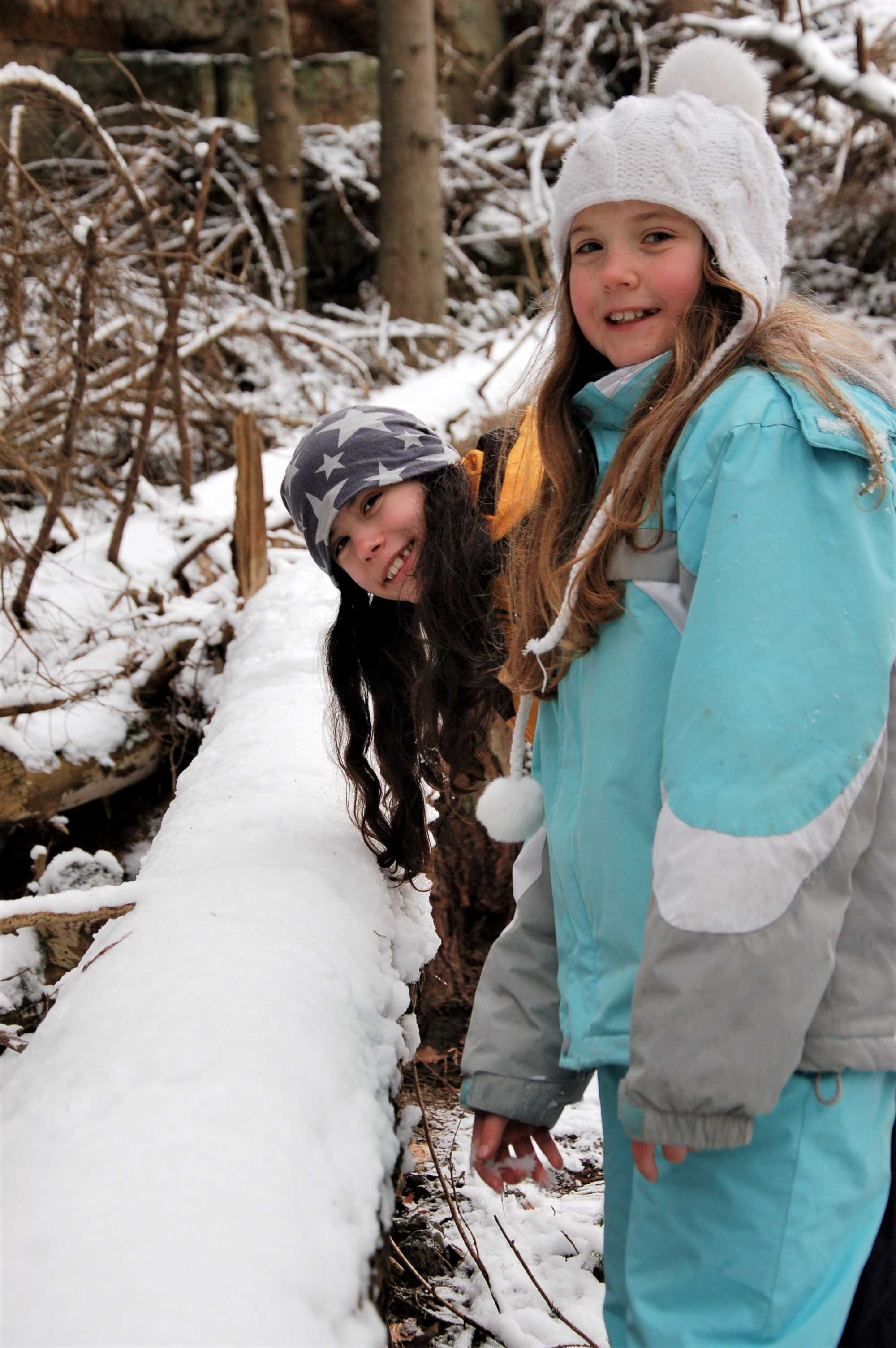
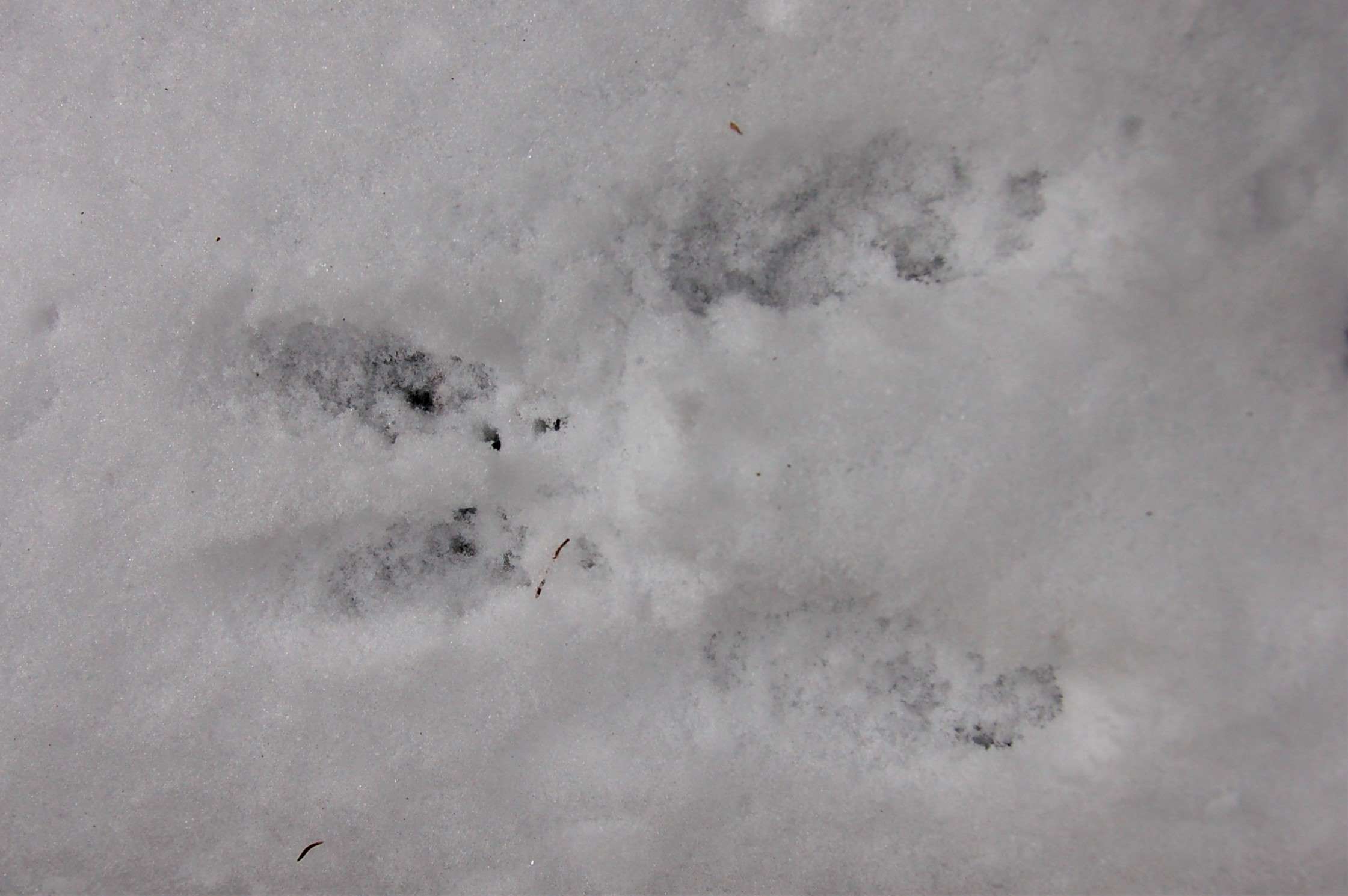
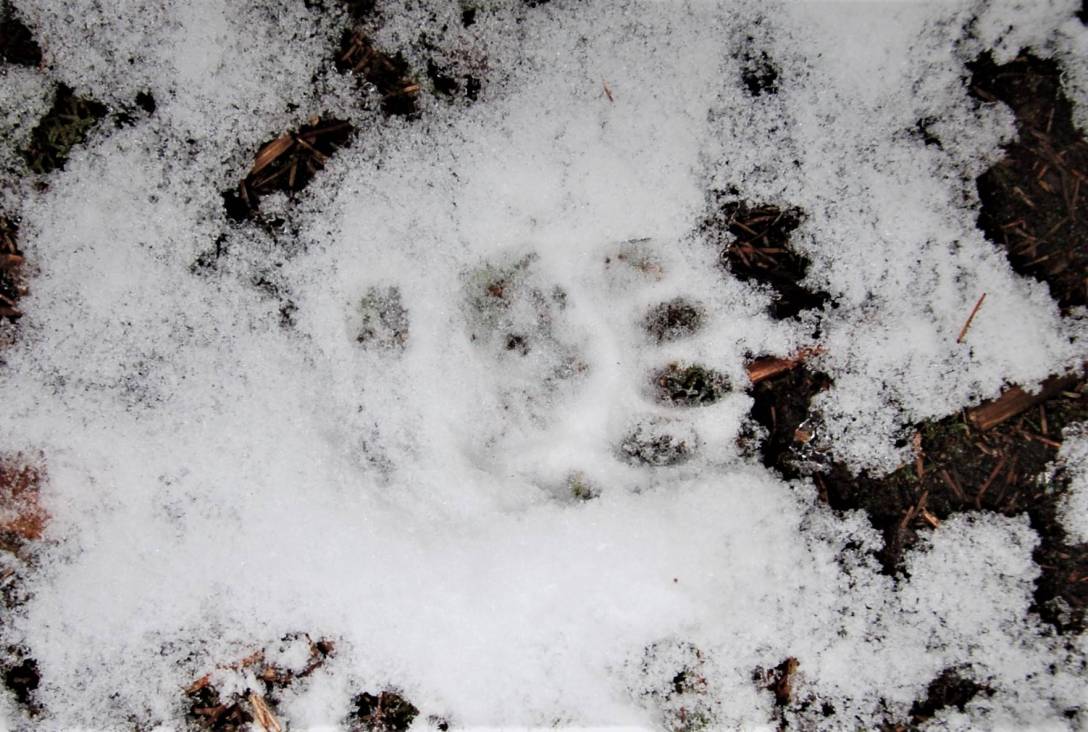
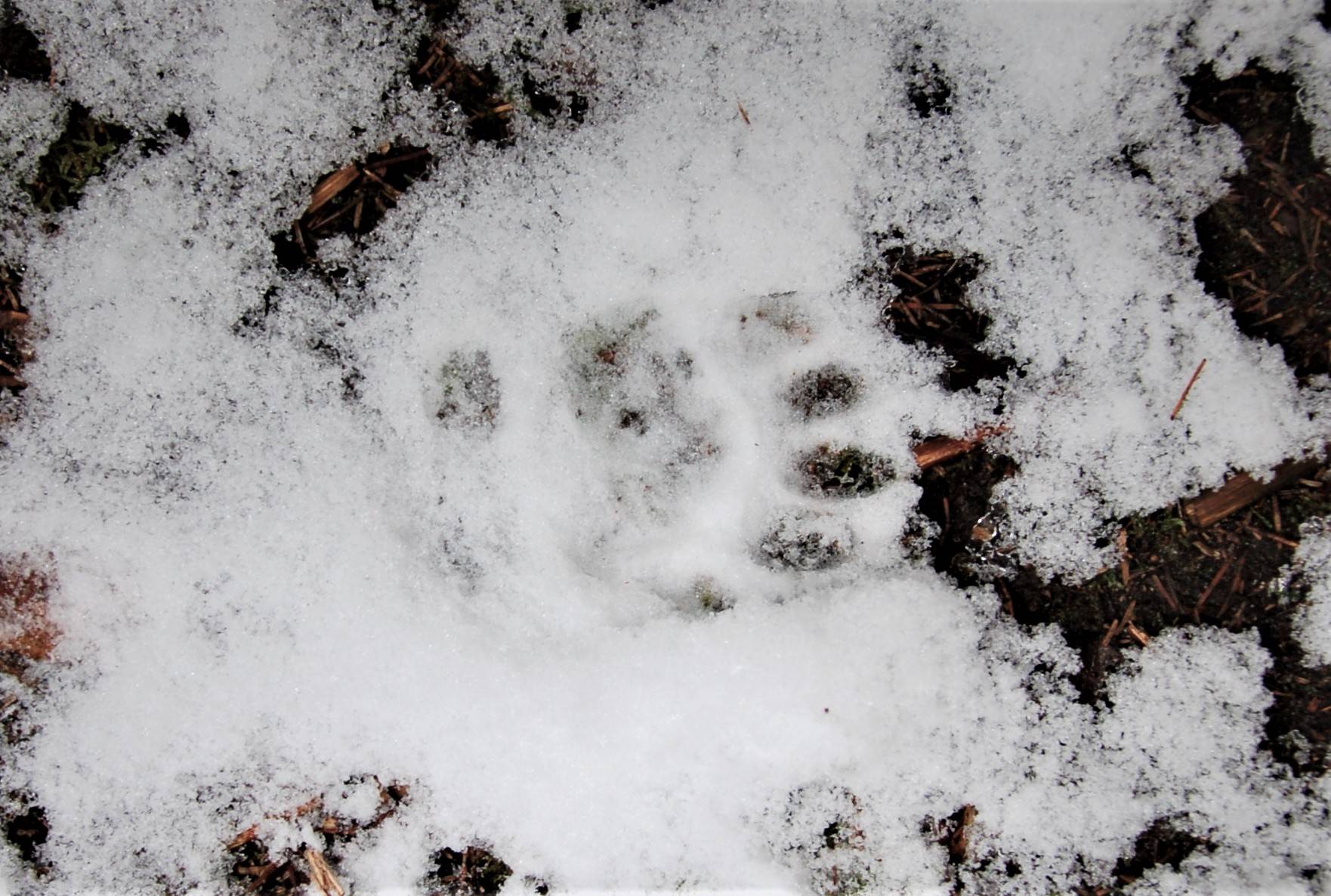
A little further on, and it became clear that the “Unexplored Territories” was casting its magic spell once again: one of the kids spotted some badger tracks, strutting along the main path. Often the claws are visible at the end of the five padded toes, making this one of the easiest animals to identify, but not today. This was clearly a chillaxed badger.
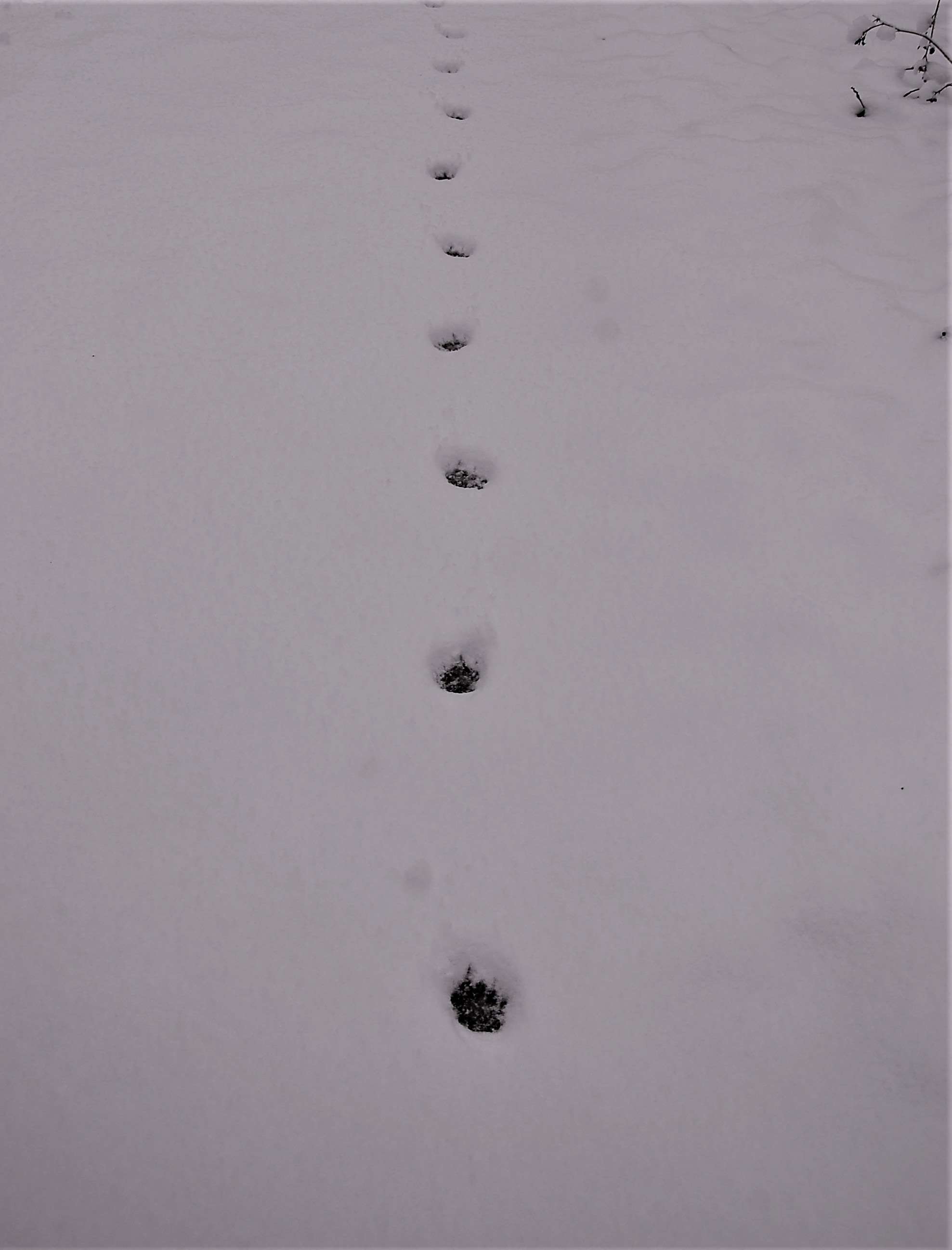
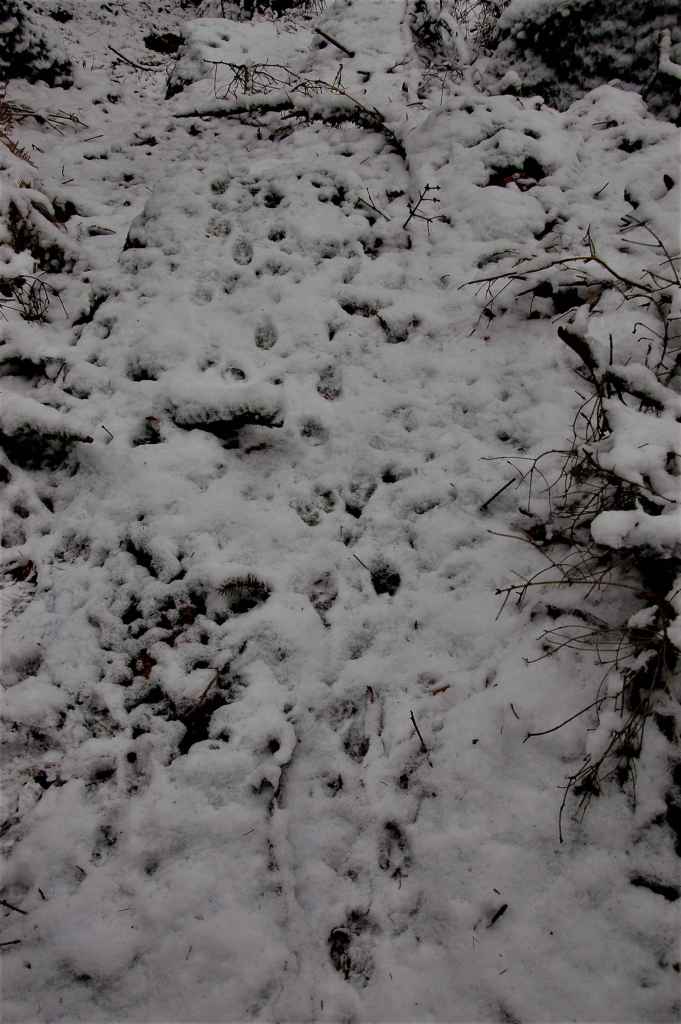
Things went quiet for a while after that. We had hoped to find traces of wild pigs around a spring that we know they frequent in summer… but no, nothing. Begrudgingly accepting that we’d used up all our luck early in the hike, we decided to leave the “Unexplored Territories” and scramble back down into the valley. Then we discovered that a fox (probably) had used the exact same route to climb up in the opposite direction.
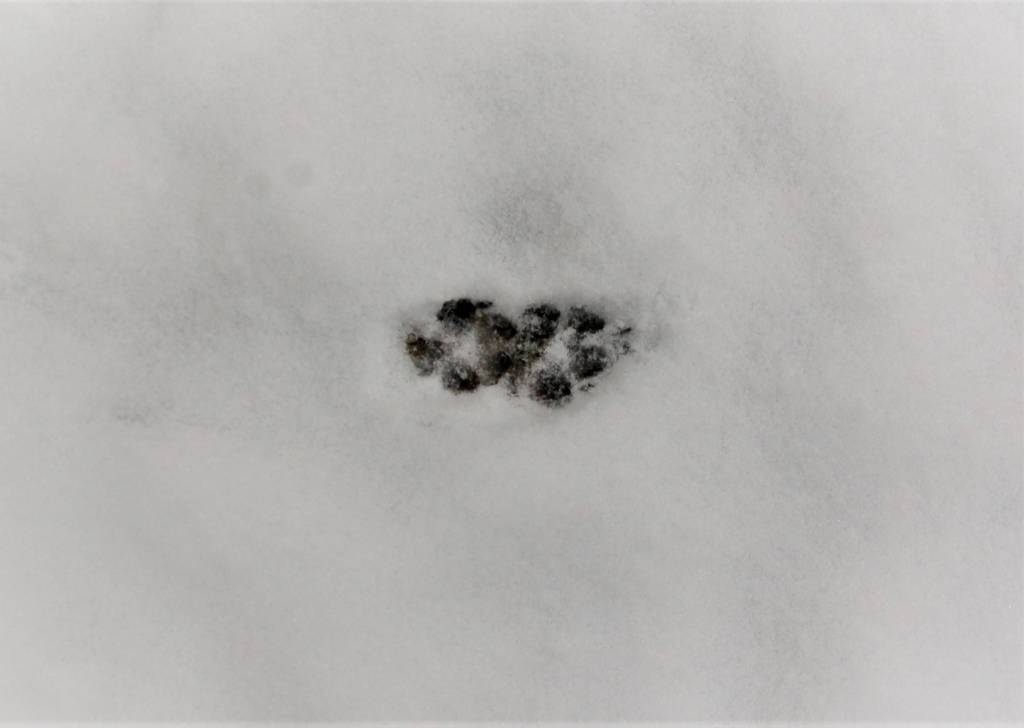
It can sometimes be tricky to distinguish between fox and small dog tracks, but this was clearly NOT a dog because of the complete lack of human prints for many dozens of metres around. Oval is the key when identify fox tracks: four oval toes (the front two looking directly forwards) and an oval or chevron-shaped rear pad. Here’s some clearer ones we found later.
Also, foxes are generally much more direct and focused than dogs: they move in straight lines whereas dogs tend to zigzag haphazardly depending on where their carefree nose takes them.
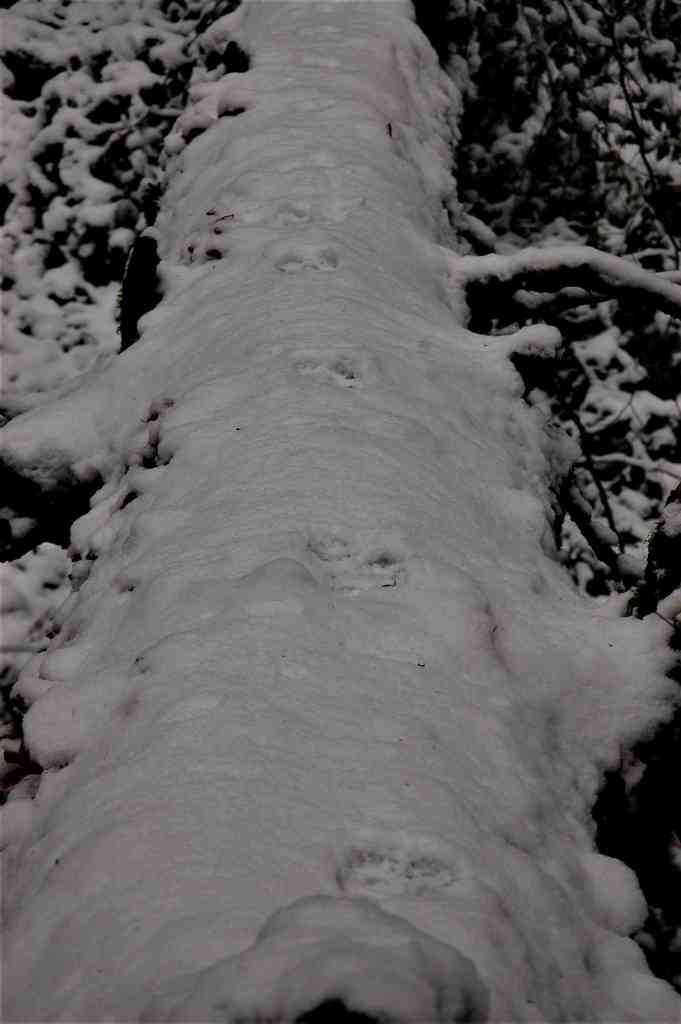
And speaking of straight lines, our final find of the day baffled us completely – neatly paired paw prints spanning a large fallen tree. We were almost back in the village by this stage, so we shrugged them off as being from a domestic cat, but the strange two-by-two nature of the tracks had left a nagging doubt in my mind. Some internet research at home and I think we have the answer – a pine marten!
Six mammals and countless unidentified birds: not a bad haul for a short walk in the snow. No doubt the kids will be out again tomorrow looking for the wild pig, the elusive and invasive raccoon (yes, we have some of those here in Luxembourg!) and – the holy grail of animal tracks in the snow – maybe even a wolf…
(c) 2021 Jonathan Orr

 Luxembourg Outdoors